Makatussin Logo
Table of Contents
Key Takeaways
- Understand the wellness benefits and risks of the discussed treatment.
- Learn how to identify authentic healthcare products from counterfeits.
- Consult with our wellness experts for personalized expert advice.
The journey of a brand's visual identity often mirrors its evolving legacy, encapsulating decades of trust, innovation, and cultural resonance. Few pharmaceutical brands exemplify this as profoundly as Makatussin, whose distinctive Makatussin logo has become synonymous with a particular type of cough relief, deeply rooted in Switzerland. For many, the sight of the Makatussin logo instantly conjures images of Swiss pharmaceutical quality and efficacy, extending its recognition far beyond its therapeutic intent into various cultural narratives. This article delves into the intricate story behind the Makatussin logo, exploring its design, its cultural impact, and its enduring presence in a complex market, cementing its status as a recognized visual icon.
Key Takeaways
- The Makatussin logo represents a blend of traditional pharmaceutical branding and modern recognition, originating from Switzerland.
- Its design likely emphasizes trust, efficacy, and Swiss quality, influencing both its medical and cultural perception.
- The brand, often referred to as Makkatusin, has navigated the complexities of intellectual property and brand protection.
- The Makatussin logo’s widespread recognition extends beyond its intended medical use, affecting various user demographics.
- Understanding the logo’s evolution offers insight into pharmaceutical branding strategies and cultural adaptation.
The Enduring Visual Identity: Exploring the Makatussin Logo, Switzerland, and Makkatusin
The visual representation of a brand is more than just a symbol; it is a promise, a history, and an immediate identifier. For Makatussin, a name deeply embedded in the pharmaceutical landscape, particularly in Switzerland, its logo serves as a powerful emblem. The term "Makatussin" itself, sometimes mispelled as "Makkatusin," refers to a cough syrup primarily known for containing dihydrocodeine. This active ingredient places it within a specific category of medication, but it is the brand's consistent visual identity, manifested in the Makatussin logo, that has allowed it to carve out a distinct space in the collective consciousness.
The origins of the Makatussin brand are firmly planted in Switzerland, a nation renowned globally for its precision, quality, and pharmaceutical innovation. This Swiss heritage is subtly, yet powerfully, communicated through its branding. While the earliest iterations of the Makatussin logo might have been functional and straightforward, mirroring the conservative aesthetic common in early 20th-century pharmaceutical packaging, subsequent redesigns would have sought to balance tradition with contemporary appeal. The exact year of the logo's initial design is difficult to pinpoint without direct historical archives from its manufacturer, but its longevity suggests a gradual evolution rather than radical overhauls.
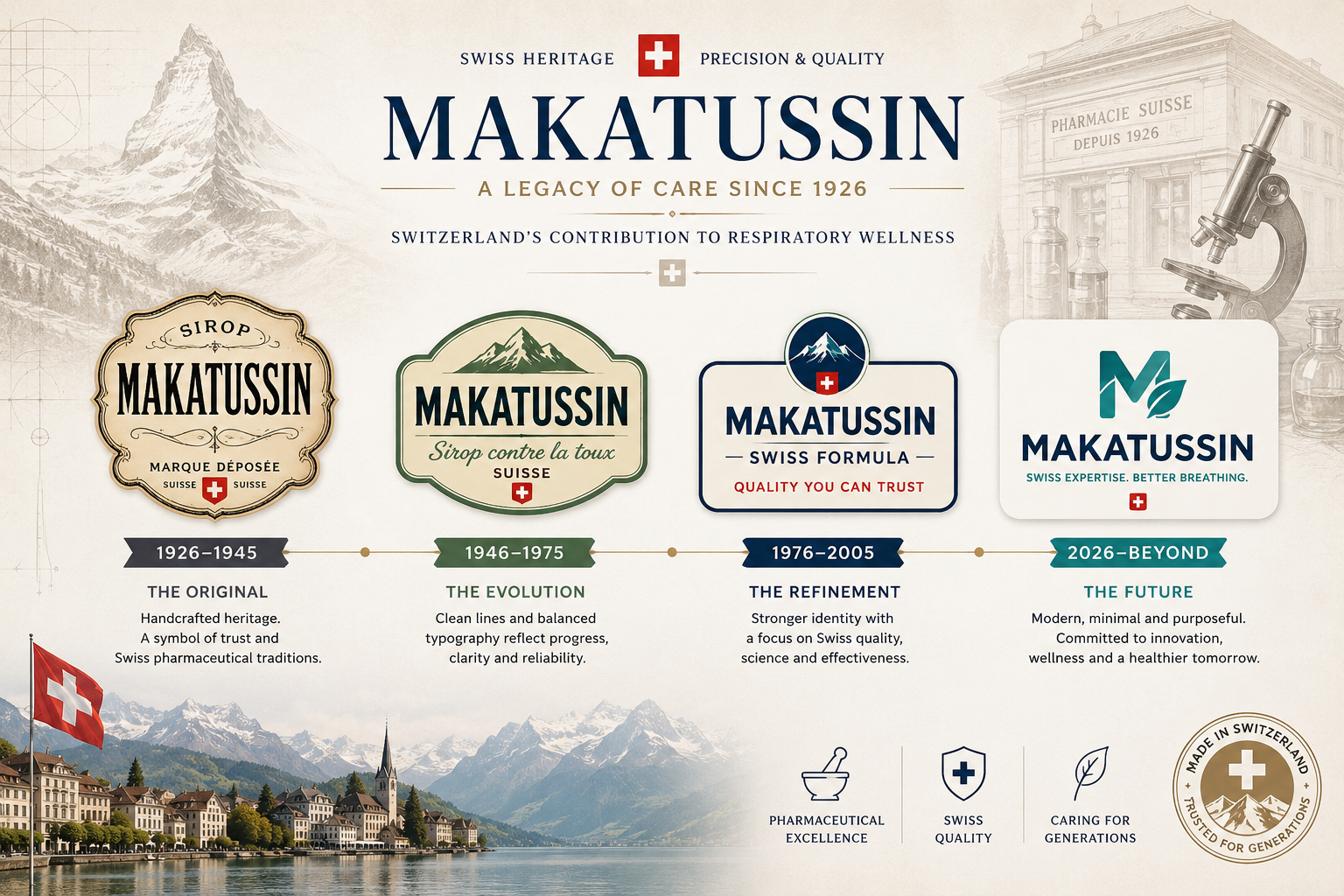 A logo's effectiveness lies in its ability to communicate without words, to evoke trust and familiarity. The Makatussin logo, through its consistent application on packaging and promotional materials, has achieved this. It speaks to a certain segment of the population—those seeking effective cough relief—while also becoming an unintended cultural touchstone for others due to its active ingredient. This duality adds layers to its interpretation and recognition, making the study of the Makatussin logo a fascinating case in branding.
Design Principles and Intellectual Property Behind the Makatussin Logo
Understanding the design principles behind the Makatussin logo involves looking at common pharmaceutical branding strategies. Typically, such logos emphasize clarity, trustworthiness, and a sense of scientific rigor. Colors might be chosen to evoke a sense of calm or clinical purity, often utilizing blues, greens, or whites. Typography is usually legible and professional, avoiding overly decorative or whimsical fonts that could undermine the product's serious purpose. For a brand like Makatussin, which offers a potent medication, the logo's design elements would likely reinforce its perceived efficacy and safety, aligning with the high standards expected from products originating in Switzerland.
The protection of the Makatussin logo is a critical aspect of its continued existence and market presence. As an intellectual property (IP), the logo is a registered trademark, granting its owner exclusive rights to its use. This protection prevents unauthorized copying or imitation, which is particularly vital in the pharmaceutical industry where counterfeiting can have severe public health implications. In Switzerland, as in most developed nations, trademark laws are robust, ensuring that unique brand identifiers like the Makatussin logo are safeguarded.
The process of trademarking involves submitting detailed applications to national and sometimes international intellectual property offices. These applications define the visual elements of the logo, its associated product categories, and the geographic regions where protection is sought. For a brand with international recognition, even if primarily associated with Switzerland, this process can be complex. The legal framework surrounding "Makkatusin" as a brand, ensuring its distinctiveness and preventing infringement, is a testament to the value placed on its visual identity. Any attempt to reproduce or significantly alter the Makatussin logo without permission would constitute trademark infringement, leading to legal repercussions. This diligent protection underpins the brand's integrity and prevents dilution of its hard-earned reputation.
The Cultural Impact and Recognition of the Makatussin Logo, Switzerland
The Makatussin logo, despite its origins as a pharmaceutical identifier, has transcended its primary function to become a significant cultural symbol, particularly in certain subcultures. While officially a medication for coughs, its active ingredient, dihydrocodeine, has led to its recognition and occasional misuse in recreational contexts. This dual identity has profoundly impacted how the Makatussin logo is perceived, making it a visual cue that can evoke very different associations depending on the observer.
In its intended medical context, the logo signifies relief and efficacy, a product dispensed by pharmacists in Switzerland and other regions where it is available. It represents a therapeutic solution to a common ailment, backed by pharmaceutical standards. For patients, the Makatussin logo on a bottle offers a sense of reassurance, indicating a trusted product.
However, the visibility of Makatussin and similar codeine-based cough syrups has led to their appropriation within certain youth cultures, especially in the context of "lean" or "purple drank." In these circles, the Makatussin logo can become a symbol associated with illicit drug use, appearing in music lyrics, social media, and street culture. This unintended cultural proliferation creates a complex challenge for the brand, as it navigates maintaining its legitimate medical image while being inadvertently linked to recreational use.
This phenomenon is not unique to Makatussin; other pharmaceutical brands with psychoactive ingredients have faced similar cultural appropriation. The distinctive packaging and logo become recognizable icons, detached from their original purpose. For the brand, this necessitates a careful balancing act: ensuring that the medicinal benefits are clearly communicated and responsible use is promoted, without inadvertently fueling its recreational appeal. The strong association with Switzerland still lends an air of quality and legitimacy, but the cultural impact of the Makatussin logo remains a multifaceted and continuously evolving narrative in 2026.
The Local Trust Signals: Why Makatussin’s Swiss Connection Matters
The association of the Makatussin logo with Switzerland is not merely a geographic detail; it is a potent trust signal that profoundly influences consumer perception. Switzerland has meticulously cultivated a global reputation for excellence, precision, and high standards, particularly in the pharmaceutical and watchmaking industries. This national brand equity extends directly to products originating from the country, and Makatussin benefits immensely from this perception.
When consumers see a product with Swiss origins, there is an inherent expectation of quality, rigorous testing, and reliability. This trust is built upon decades of consistent performance and strict regulatory oversight within Switzerland. For a pharmaceutical product like Makatussin, this connection is invaluable. It suggests that the cough syrup is manufactured under stringent conditions, adhering to world-class pharmaceutical guidelines, and that its active ingredients are of a high purity.
The Makatussin logo, therefore, becomes more than just a brand identifier; it is a shorthand for "Swiss quality." This is particularly impactful in a global market where consumers are increasingly discerning about the provenance and manufacturing standards of their medications. For "Makkatusin" and similar Swiss pharmaceutical exports, leveraging this national identity is a key strategic advantage. It reassures prescribers, pharmacists, and end-users alike that they are choosing a product that meets exacting standards, fostering confidence and loyalty. In an era where misinformation and concerns about product authenticity are prevalent, the implicit guarantee offered by the "Made in Switzerland" mark, reinforced by the brand's consistent visual identity, is a powerful differentiator.
Conclusion
The Makatussin logo stands as a compelling case study in branding, intellectual property, and cultural resonance. Rooted deeply in Switzerland's esteemed pharmaceutical tradition, its visual identity communicates reliability, precision, and quality. From its deliberate design principles that inspire trust to the legal frameworks protecting its unique emblem, the Makatussin logo—sometimes referred to as Makkatusin—has successfully navigated a complex landscape. Its journey from a medicinal product identifier to an inadvertent cultural icon underscores the multifaceted impact a brand's visual identity can have.
In 2026, the Makatussin logo continues to be a recognizable symbol, evoking different meanings for different audiences. For the medical community and patients, it represents effective cough relief backed by Swiss standards. For others, its presence in broader cultural narratives highlights the unpredictable ways in which pharmaceutical brands can permeate public consciousness. Understanding the intricate story behind the Makatussin logo provides valuable insights into brand longevity, the power of national association, and the ongoing challenges of managing a brand's perception in a diverse and dynamic world.
Actionable Next Steps:
- For Consumers: Verify product authenticity by purchasing Makatussin from licensed pharmacies and healthcare providers to ensure genuine Swiss quality.
- For Brand Enthusiasts: Explore the historical branding evolution of other Swiss pharmaceutical companies to understand parallels and unique trajectories.
- For Industry Professionals: Analyze how national brand equity, like that of Switzerland, can be effectively leveraged to enhance trust and market positioning for pharmaceutical products.
Meta Title: Makatussin Logo: Switzerland's Iconic Cough Syrup Brand
Meta Description: Explore the Makatussin logo, its Swiss origins, design, intellectual property, and cultural impact in 2026. Discover Makkatusin's journey.
Tags: Makatussin logo, Switzerland, Makkatusin, pharmaceutical branding, intellectual property, brand identity, cough syrup, dihydrocodeine, Swiss quality, cultural impact, brand recognition, trademark
Important Health Notice
This content is reviewed by health experts for accuracy. However, individual wellness needs vary. If you are experiencing symptoms or considering new products, please ensure you are sourcing from verified health resources.
View Secure Inventory